

What You Need to Know About Alcohol Withdrawal Duration of Symptoms
Understanding the alcohol withdrawal duration of symptoms is one of the most important steps you can take if you or someone you care about is considering stopping heavy, long-term drinking.
Approximately half of all people with physical alcohol dependence will experience withdrawal symptoms when they stop or significantly reduce their drinking. For some, symptoms are mild and manageable. For others, withdrawal can become a medical emergency.
The reason withdrawal happens at all comes down to brain chemistry. Alcohol is a central nervous system (CNS) depressant. Over time, your brain compensates by ramping up its own activity to counteract alcohol’s slowing effect. When alcohol is suddenly removed, the CNS goes into a state of hyperexcitability, driven by an imbalance between the calming chemical GABA and the excitatory chemical glutamate. The result is a range of physical and psychological symptoms that can vary widely in severity.
In Australia, alcohol remains the most widely used drug in the country, with around 1 in 10 drinkers experiencing dependence. That means hundreds of thousands of Australians are at risk of withdrawal each year, many without realising how serious it can become.
This guide walks you through everything you need to know, from the day-by-day timeline, to risk factors, complications, and how to get the right support.
To ensure you have a comprehensive understanding of this process, we have compiled detailed answers to the most frequently asked questions regarding the duration and management of alcohol withdrawal symptoms at the end of this guide.
Understanding the Alcohol Withdrawal Duration of Symptoms
When we talk about alcohol withdrawal syndrome, we are referring to a predictable yet highly variable set of symptoms. These symptoms occur when someone who has developed a physical dependence on alcohol suddenly stops or significantly reduces their intake.

To manage this process safely, clinicians rely on structured clinical assessments to evaluate the severity of the syndrome. These evaluations help determine whether a person can safely recover at home or if they require a supervised inpatient admission. Understanding the underlying mechanisms and clinical presentations is essential for anyone embarking on this journey. For a deeper clinical understanding of these mechanisms, you can read the Scientific research on alcohol withdrawal syndrome.
In Australia, the impact of alcohol dependence is a significant public health focus. According to the Australian Institute of Health and Welfare data on alcohol use, a substantial portion of the population drinks at levels that place them at risk of long-term harm. When these individuals decide to make a change, understanding the physiological timeline of detoxification is the first step toward a successful recovery.
The Acute Alcohol Withdrawal Duration of Symptoms Timeline
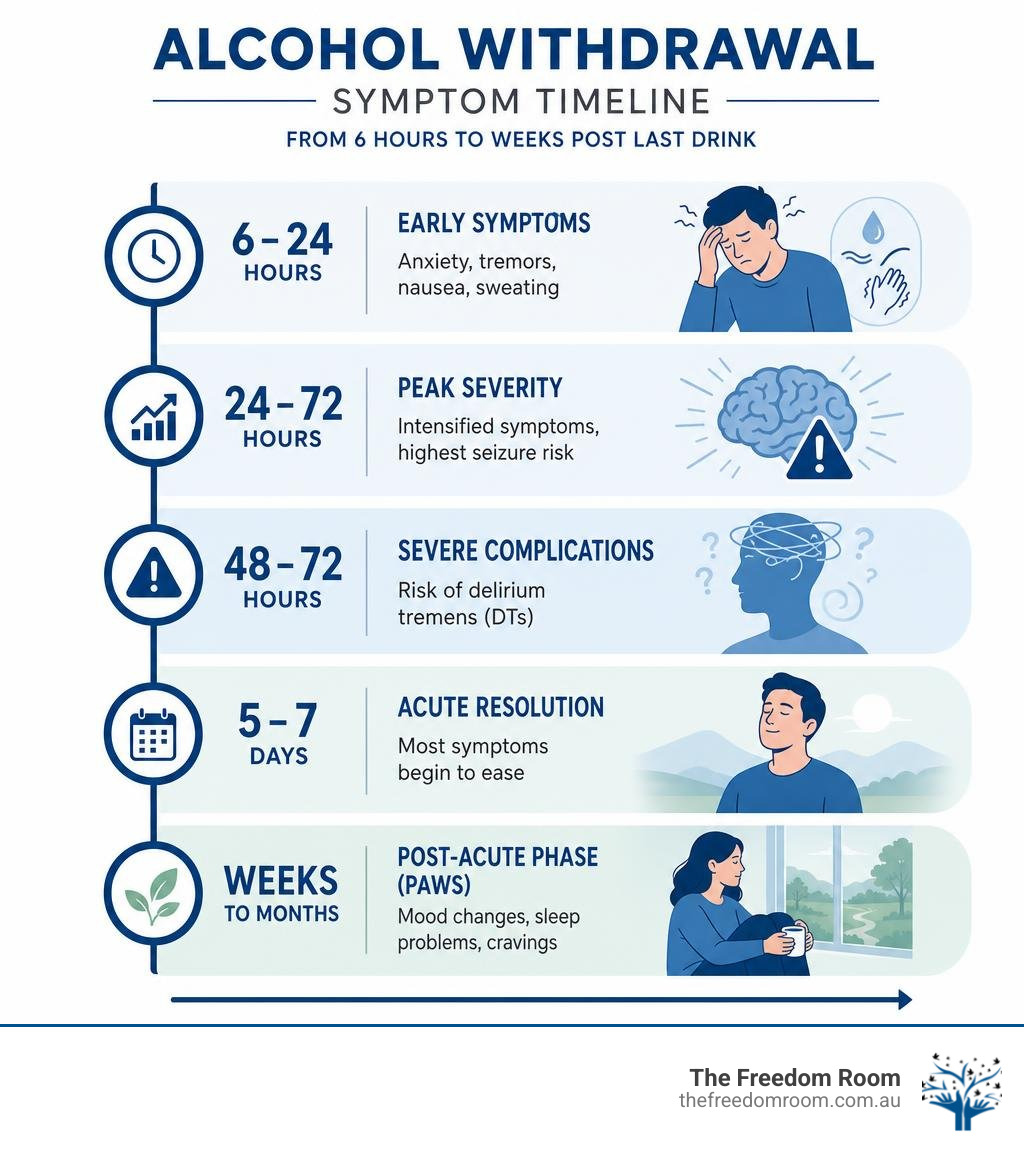
The acute phase of withdrawal generally follows a structured timeline, though the exact onset and intensity can vary. For most people, early symptoms like mild anxiety, headaches, and minor hand tremors begin within 6 to 24 hours after the last drink. These initial signs are the brain’s immediate reaction to the absence of alcohol’s sedative effects.
To explore this initial phase in detail, you can refer to Your Guide to Alcohol Withdrawal and Detox Timelines. As the timeline progresses, symptoms typically reach their peak severity between 24 and 72 hours. During this peak window, physical discomfort can intensify, and the risk of experiencing more severe complications, such as withdrawal seizures, reaches its highest point.
For a comprehensive day-by-day breakdown of what to expect during this period, read our guide on From Last Sip to First Step: Your Alcohol Withdrawal Timeline Explained. For the vast majority of individuals, acute symptoms begin to resolve within 5 to 7 days, allowing the body to return to a baseline state of physical stability. To understand how medical professionals categorise and track these clinical stages, you can review the Clinical guidelines on acute withdrawal course.
Factors Influencing the Alcohol Withdrawal Duration of Symptoms
No two people experience withdrawal in the exact same way because several individual factors influence both the duration and severity of the symptoms. The most significant factors include:
- The average quantity and daily frequency of alcohol consumption.
- The overall duration of heavy drinking over months or years.
- An individual’s unique metabolic rate and liver function.
- Age and general physical health, including co-existing medical conditions.
- A history of undergoing multiple previous withdrawals.
This last factor is associated with a biological process known as the kindling phenomenon. Kindling occurs when repeated episodes of withdrawal cause the brain’s central nervous system to become increasingly sensitive. With each subsequent attempt to stop drinking, the withdrawal symptoms can become progressively more severe and develop more rapidly.
This neurochemical sensitivity highlights why trying to stop cold turkey without professional guidance can be highly unpredictable. For a detailed exploration of how these personal variables shape the detoxification process, you can read The Essential Guide to Alcohol Addiction Withdrawal.
Recognising Mild, Moderate, and Severe Withdrawal Stages
Withdrawal symptoms are generally categorised into three distinct stages based on their clinical severity. Mild withdrawal typically presents with psychological and minor physical signs, such as mild anxiety, irritability, sleep disturbances, and slight tremors. These symptoms are uncomfortable but generally do not pose immediate physical danger.
Moderate withdrawal involves a progression to more pronounced physical symptoms. These can include excessive sweating, rapid heart rate, elevated blood pressure, and mild fever. At this stage, the body’s autonomic nervous system is working under significant stress to find balance.
Severe withdrawal is characterised by extreme autonomic instability, profound confusion, and severe agitation. This stage represents a critical medical situation that requires immediate intervention to prevent life-threatening complications.
To better understand specific physical signs like tremors, you can read The Duration of Alcohol Detox Tremors Explained. Additionally, the psychological distress of this process is detailed in our article on Alcohol Withdrawal and Anxiety: The Science of the Scares. For a comprehensive clinical overview of how these stages are classified, you can refer to the Cleveland Clinic overview of withdrawal severity.
Severe Complications: Seizures and Delirium Tremens
The most critical risks associated with alcohol withdrawal are grand mal seizures and a condition known as delirium tremens (DTs). Withdrawal seizures can occur relatively early in the process, typically within 12 to 48 hours after the last drink, and can happen even in patients who have no prior history of epilepsy.
Delirium tremens is the most severe form of withdrawal, usually developing 48 to 72 hours after cessation. DTs are characterised by sudden and severe mental status changes, extreme disorientation, vivid hallucinations, and dangerous fluctuations in vital signs. Without prompt, high-quality medical care, DTs carry a historical mortality rate of up to 20 percent, though modern critical care has reduced this to approximately 1 to 5 percent.
To protect yourself or a loved one, it is vital to learn how to identify these warning signs early. You can find detailed clinical descriptions in our Detailed Guide to Delirium Tremens (DTs) and learn to spot critical symptoms by reading The DTs Decoded: Recognising the Most Severe Alcohol Withdrawal Symptoms. For professional medical guidelines on managing these acute toxicities, consult the Merck Manual professional guidelines on alcohol toxicity.
Post-Acute Withdrawal Syndrome (PAWS) and Long-Term Recovery
While the physical symptoms of acute withdrawal generally subside within a week, the brain requires a much longer period to fully recalibrate its neurochemistry. This prolonged adjustment phase is known as Post-Acute Withdrawal Syndrome (PAWS). PAWS can cause protracted symptoms that persist for weeks or even several months after the last drink.
Common signs of PAWS include persistent sleep disturbances, sudden mood swings, heightened anxiety, cognitive difficulties, and intense cravings. Because these symptoms are primarily psychological and emotional, they can be highly challenging to navigate without ongoing support and structured coping strategies.
Experiencing PAWS does not mean your recovery is failing; rather, it is a normal sign that your nervous system is gradually healing. Accessing professional counselling and peer support during this phase is incredibly beneficial for maintaining long-term sobriety. To learn more about managing this phase of your journey, read our Long-term Alcohol Withdrawal Guide.
The Role of Medical Supervision and Safe Detoxification
Because of the unpredictable nature of the alcohol withdrawal duration of symptoms, undergoing detoxification under professional medical supervision is always the safest approach. Medical professionals utilise standardised tools like the Clinical Institute Withdrawal Assessment for Alcohol (CIWA-Ar) to monitor symptoms objectively and adjust treatment in real time.
Pharmacological interventions, particularly benzodiazepines, are frequently prescribed to manage moderate to severe symptoms. These medications help calm the overexcited central nervous system, significantly reducing the risk of seizures and delirium tremens. Additionally, nutritional support, including high-dose thiamine (Vitamin B1) injections, is critical to prevent serious neurological complications such as Wernicke-Korsakoff syndrome.
A planned, supervised detox ensures that you are kept safe and as comfortable as possible throughout the entire process. To learn more about how a structured, clinical detox can help you transition safely, read about our options for Safe Alcohol Detox and explore our specialised approach to Alcohol Dependence Detox.
Start Your Journey to Lifelong Recovery Today
At The Freedom Room Wellness and Recovery, we understand that taking the first step toward change can feel overwhelming. Our compassionate team brings valuable lived experience to our work, offering authentic empathy, deep understanding, and non-judgemental support because we have walked this path ourselves.

We believe that recovery is not just about getting through the initial detox; it is about building a fulfilling, healthy, and sustainable life. We offer cost-effective, highly personalised therapy sessions, educational workshops, and supportive recovery programmes tailored to your unique needs and goals.
If you are ready to explore your options for lasting change, we invite you to learn more about Our Services and discover how we can support you. Please do not hesitate to Contact Us today to speak with a caring professional. You can also visit us in person at our welcoming location: 9a/521 Beams Rd, Carseldine QLD 4034.
Frequently Asked Questions
How long does the acute phase of alcohol withdrawal last?
For most individuals, the acute phase of alcohol withdrawal begins within 6 to 24 hours after the last drink, peaks in intensity between 24 and 72 hours, and generally resolves within 5 to 7 days. However, the exact timeline depends on individual factors such as the duration and volume of prior alcohol consumption.
What is Post-Acute Withdrawal Syndrome (PAWS) and how long does it persist?
Post-Acute Withdrawal Syndrome (PAWS) refers to a set of psychological and emotional symptoms, including anxiety, mood swings, sleep disturbances, and cravings, that persist after the acute physical symptoms have resolved. PAWS can last for several weeks or even months as the brain gradually recalibrates its neurochemistry.
Why is medical supervision recommended during alcohol withdrawal?
Medical supervision is highly recommended because alcohol withdrawal can be unpredictable and life-threatening. Clinical professionals can monitor vital signs, administer medications like benzodiazepines to prevent seizures and delirium tremens, and provide nutritional support to ensure safety and comfort.
What is the kindling phenomenon in alcohol withdrawal?
Kindling is a biological process where repeated episodes of alcohol withdrawal cause the central nervous system to become increasingly sensitive. Consequently, each subsequent withdrawal attempt can result in more rapid onset and significantly more severe symptoms.
Can you experience seizures during alcohol withdrawal?
Yes, withdrawal seizures, particularly grand mal seizures, are a severe complication that can occur within 12 to 48 hours after the last drink. This risk highlights the critical importance of undergoing detoxification under professional medical supervision.