

How Long Do Alcohol Withdrawal Shakes Last?
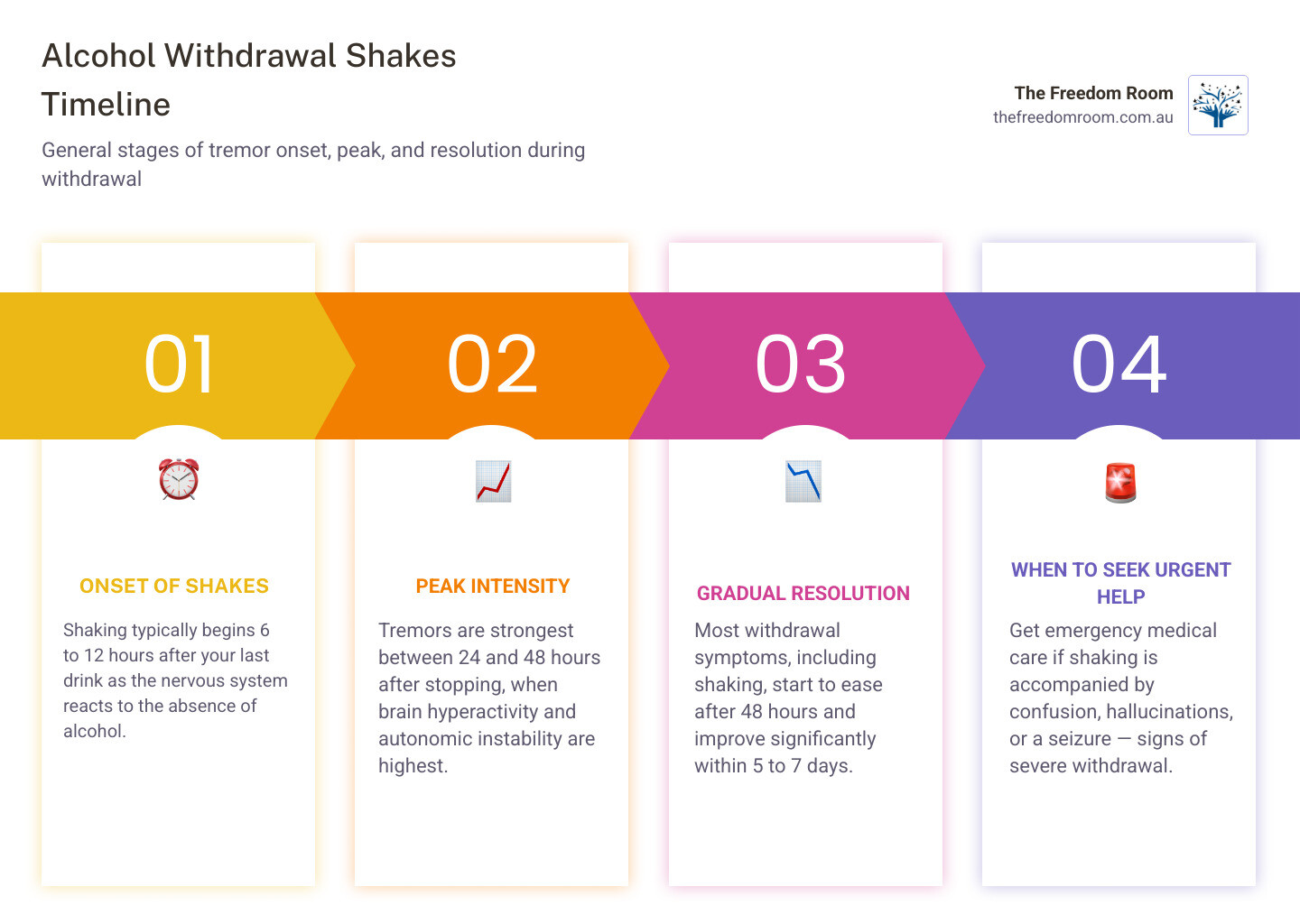
People often want to know how long alcohol withdrawal shakes can last. Harvard Health’s overview of alcohol withdrawal describes typical symptom timing, including tremors that may begin within 6 to 12 hours after the last drink, peak between 24 and 48 hours, and gradually subside over 5 to 7 days. Withdrawal intensity varies significantly between individuals based on personal physiology, overall health, and drinking history, so timelines offer guidance rather than rigid personal forecasts. The source also explains why symptoms can range from mild tremors to serious complications.
Shaking represents an early sign of central nervous system rebound. Anyone who may be physically dependent on alcohol should seek qualified medical advice before altering their drinking habits. If tremors occur alongside confusion, fever, or hallucinations, immediate emergency medical care is essential.
Key educational resources for understanding withdrawal progression include:
- Alcohol Withdrawal Timeline
- Alcohol Withdrawal Duration of Symptoms
- Alcohol Withdrawal Timeline Delirium Tremens
Understanding Alcohol Shakes and Why Withdrawal Tremors Occur

Alcohol withdrawal tremors, commonly referred to as the shakes, are involuntary, rhythmic muscle contractions that most frequently affect the hands, fingers, and arms. To understand why tremors develop, it is necessary to examine how chronic alcohol intake alters central nervous system chemistry over time.
Alcohol acts as a primary central nervous system depressant. It enhances gamma-aminobutyric acid (GABA), the major inhibitory neurotransmitter promoting calmness and sedation, while simultaneously suppressing glutamate, an excitatory neurotransmitter. When heavy alcohol consumption continues over weeks or months, the brain adapts by reducing GABA receptor sensitivity and increasing glutamate activity to maintain baseline function despite continuous sedation.
When alcohol consumption stops abruptly, this artificial chemical brake is removed. The brain is left in an acutely hyperactive state dominated by uninhibited glutamate excitation and suppressed GABA function. This neurochemical imbalance triggers the physical vibrations recognised as withdrawal tremors.
Why the Nervous System Shakes After Stopping Alcohol
The sudden removal of alcohol activates autonomic hyperactivity, overstimulating the sympathetic nervous system. The body releases surplus stress hormones, including adrenaline and noradrenaline, which accelerates heart rate, elevates blood pressure, and produces involuntary motor trembling.
It is clinically valuable to distinguish morning shakiness from genuine withdrawal tremors. Occasional morning shakiness after an isolated episode of heavy drinking can relate to transient dehydration, electrolyte shifts, and rebound sympathetic activity. By contrast, true withdrawal tremors reflect physiological neuroadaptation and physical dependence.
Nutritional factors also influence tremor severity. Chronic heavy drinking impairs the absorption and storage of essential micronutrients, particularly thiamine (vitamin B1). Thiamine deficiency compromises nerve function and motor control, intensifying muscle trembling during cessation.
Differentiating Mild Tremors from Delirium Tremens
Early withdrawal shakes must be distinguished from severe medical emergencies. Mild to moderate withdrawal tremors usually present as fine hand trembling alongside mild anxiety, sweating, restlessness, and nausea.
In contrast, delirium tremens represents a severe, complex medical emergency that can arise during acute withdrawal, as described in Harvard Health’s overview of alcohol withdrawal. Delirium tremens involves profound mental confusion, visual or tactile hallucinations, severe autonomic instability, and cardiovascular strain. For broader Australian information about alcohol-related harm, see the Australian Institute of Health and Welfare. Reviewing clinical signs for recognising severe alcohol withdrawal symptoms helps clarify how complex complications differ from typical motor shakes.
| Characteristic | Mild to Moderate Withdrawal Tremors | Delirium Tremens (DTs) |
|---|---|---|
| Typical Onset | 6 to 12 hours after last drink | 48 to 72 hours after last drink |
| Primary Symptoms | Fine hand tremors, sweating, mild nausea, anxiety | Gross tremors, severe confusion, vivid hallucinations, fever |
| Autonomic Impact | Mildly elevated pulse and blood pressure | Extreme cardiovascular instability, dangerous fever, rapid pulse |
| Mental State | Alert and fully oriented | Severe delirium, acute agitation, complete disorientation |
| Medical Urgency | Clinical assessment and monitoring advised | Immediate emergency hospital admission required |
How Long Do Shakes From Alcohol Withdrawal Last? A Complete Timeline
How long alcohol withdrawal shakes last depends on the individual rather than a fixed timetable. A typical progression can provide useful context, but factors such as drinking pattern, previous withdrawal episodes, physical health, and metabolic differences can affect both the severity and duration of symptoms. Anyone considering reducing or stopping alcohol use should seek personalised medical advice instead of relying on a standard schedule.
Harvard Health’s overview of alcohol withdrawal outlines common withdrawal patterns and the clinical factors that influence risk, while our alcohol withdrawal timeline guide provides additional recovery-focused context.
How Long Do Shakes From Alcohol Withdrawal Last Across Recovery Stages?
For most individuals experiencing uncomplicated mild to moderate withdrawal, symptoms follow a predictable sequence:
- Onset Phase (6 to 12 Hours): Tremors typically become noticeable within 6 to 12 hours following the final drink as blood alcohol concentrations decrease. Initial symptoms include fine hand shakes, mild sweating, internal restlessness, and elevated anxiety.
- Peak Intensity Phase (24 to 48 Hours): Tremor intensity generally peaks between 24 and 48 hours after cessation. Sleep disturbance, elevated heart rate, gastrointestinal upset, and more pronounced trembling are common during this stage.
- Gradual Subacute Resolution (48 to 72 Hours): By day three, uncomplicated tremors begin to diminish in severity as central nervous system neurotransmitters begin restoring equilibrium.
- General Resolution (5 to 7 Days): For the majority of people, acute physical tremors resolve substantially within 5 to 7 days of cessation.
In cases involving long-standing heavy consumption, mild shakiness may linger somewhat longer. Exploring the duration of alcohol detox tremors alongside resources on understanding how long alcohol withdrawal lasts provides deeper context on individual recovery paths.
Key Factors Influencing Tremor Severity and Duration
Several physiological, behavioural, and environmental factors can influence how long tremors last. The Alcohol and Drug Foundation’s guidance on safely withdrawing from alcohol outlines the factors clinicians consider when assessing withdrawal risk:
- Quantity and Frequency of Intake: Sustained heavy daily consumption creates deeper neurological adaptations, requiring more time for neurotransmitter rebalancing.
- Withdrawal History and Kindling: Repeated episodes of withdrawal can sensitise neural pathways, potentially increasing symptom severity in subsequent episodes.
- Co-Occurring Health Conditions: Liver impairment, cardiovascular conditions, and metabolic disorders can slow natural metabolic clearance and physiological recovery.
- Nutritional Status: Depleted micronutrient reserves, such as thiamine and essential electrolytes, increase neuronal excitability and prolong muscle trembling.
- Age and Metabolic Health: Slower metabolic clearance in older adults can extend the physical duration of acute withdrawal symptoms.
Our complete guide to alcohol withdrawal symptom duration offers further detail on these biological variables.
Safe Medical Management and Recovery Support

Attempting to stop drinking abruptly without clinical guidance carries substantial risks for anyone experiencing physical dependence. Because withdrawal symptoms can escalate unpredictably from minor tremors into complications such as seizures, seeking medical advice prior to reducing or stopping alcohol is vital.
Professional care begins with an evidence-based clinical assessment. NSW Health’s emergency care guidance for substance withdrawal outlines assessment, monitoring, and escalation considerations in acute care settings. Doctors commonly employ structured assessment instruments, such as the Clinical Institute Withdrawal Assessment for Alcohol (CIWA-Ar), to evaluate tremor severity, pulse, sweating, and orientation, tailoring treatment accordingly. For detailed strategies on planning safe cessation, consult our guide on planning a safe alcohol detox.
Medical Treatments and Supportive Care for Tremors
Standard clinical interventions focus on stabilising central nervous system excitation, preventing complications, and restoring physical health:
- Pharmacological Support: General practitioners and hospital teams often prescribe tapering courses of medications, such as benzodiazepines, to stimulate GABA pathways and manage tremors safely.
- Nutritional Support and Hydration: Supervised hydration corrects fluid imbalances, while therapeutic thiamine administration protects neurological health and nerve signalling during withdrawal.
- Clinically Supervised Tapers: When sudden cessation presents elevated health risks, medical practitioners may coordinate a managed reduction schedule to mitigate acute physiological distress.
- Supportive Lifestyle Practices: Restful sleep, reduced caffeine, balanced nutrition, and gentle mindfulness techniques support nervous system stability once acute withdrawal resolves.
Embrace Your Recovery Path with Us by Your Side
Navigating physical withdrawal symptoms can feel daunting, but you never have to walk this journey on your own. Gaining clarity on how long tremors last is an empowering first step toward reclaiming your health and wellbeing. Because symptom intensity varies widely, general timelines should always be paired with individual medical evaluation. If you or someone close to you is considering changing their relationship with alcohol, collaborating with experienced professionals ensures every stage is handled safely and effectively.
At The Freedom Room Wellness and Recovery, we provide warm, non-judgemental support informed by lived experience. We offer personalised in-person Our Services at our welcoming clinic located at 9a/521 Beams Rd, Carseldine QLD 4034, as well as accessible guidance through our structured 12-week online recovery program. When you are ready to take positive steps toward lasting wellness, please Contact Us to begin a supportive conversation today.
Frequently Asked Questions: How Long Do Shakes From Alcohol Withdrawal Last?
Can alcohol withdrawal shakes become permanent?
Acute withdrawal shakes usually resolve completely within 5 to 7 days as brain chemistry recalibrates. However, prolonged heavy alcohol use over many years can sometimes cause structural damage to the cerebellum, the brain area controlling coordination and motor precision. If tremors persist for several months following complete cessation, a thorough medical consultation is recommended to assess for underlying neurological conditions.
Are morning shakes always a sign of severe alcohol dependence?
Morning shakiness does not always indicate severe dependence, as it can be triggered by acute dehydration, low blood glucose, and rebound adrenaline after heavy episodic drinking. However, if morning shakes occur consistently and only subside after consuming alcohol, this strongly suggests physical dependence and warrants a confidential evaluation by a medical professional.
What should I do if my tremors worsen after 48 hours?
If tremors escalate in severity beyond 48 hours, or if they are accompanied by confusion, extreme restlessness, heavy sweating, visual distortions, or a rapid pulse, seek emergency medical assistance immediately. This progression can signal the development of delirium tremens, which requires monitored hospital care.
How does The Freedom Room support people experiencing physical dependence on alcohol?
The Freedom Room provides empathetic, recovery-focused counselling and education delivered by professionals with lived experience. While acute medical detox requires clinical supervision from qualified medical practitioners, we offer ongoing counselling, emotional support, and relapse prevention strategies. To learn more, explore our specialised resources on physical dependence on alcohol.