

How Mindful Awareness Can Support Alcohol Recovery
Mindfulness based recovery starts with a deliberate pause. When an urge to drink appears, noticing the urge, taking several slow breaths, and naming the internal experience without self-judgement allows an individual to choose a constructive next step. You do not have to act on an urge simply because it arises. In Australia, alcohol remains one of the most widely used substances, and national reporting from the AIHW alcohol statistics highlights the substantial health and social impacts associated with risky drinking patterns across communities.
With regular practice, this mindful pause helps you recognise emotional tension, environmental cues, and drinking habits much earlier. Mindful awareness supports recovery alongside social, psychological, and clinical care, but it does not replace essential medical intervention. If you suspect you may have physical alcohol dependence, it is vital to consult a qualified medical practitioner before reducing or stopping your intake. Alcohol withdrawal severity varies significantly between individuals and can involve unpredictable, serious health complications.
Key Takeaways:
- Mindfulness-based recovery cultivates nonjudgmental awareness to interrupt automated drinking triggers.
- Evidence-based techniques such as urge surfing teach people to ride out cravings without attempting thought suppression.
- Clinical protocols like MBRP and MORE strengthen executive cognitive control and regulate autonomic nervous system reactivity.
- Mindful techniques provide complementary psychological support but do not substitute for professional medical care or supervised detoxification.
- Professional guidance, peer connection, and tailored counselling provide a safe foundation for long-term health.
Explore related resources on evidence-informed recovery methods:
- Cognitive behavioural therapy
- Conflict resolution for addiction
- Conflict resolution strategies in recovery
Understanding Mindfulness-Based Recovery and Relapse Prevention
Mindfulness-based recovery integrates structured meditation, present-moment attention, and cognitive awareness into the daily process of healing from problematic alcohol use. Rather than attempting to force thoughts away or relying solely on willpower, this framework teaches individuals to observe their internal experiences with curiosity and kindness.
In conventional patterns of problematic substance use, reactions to distress often occur on autopilot. An uncomfortable emotion, physical fatigue, or interpersonal tension can immediately trigger an automatic urge to drink. Mindfulness interrupts this automaticity by building dispositional mindfulness, which encompasses observing present sensations, describing internal states, acting with awareness, and maintaining nonjudgmental acceptance toward temporary thoughts and emotional states.
Core Principles of Mindfulness-Based Recovery Frameworks
At the heart of mindfulness-informed recovery are specific attentional practices that support emotional balance. These approaches are often integrated into a holistic approach to addiction, addressing the physical, psychological, and social dimensions of wellbeing together:
- Focused Attention: Cultivating the ability to anchor attention intentionally on a neutral anchor, such as the physical sensation of breathing, helping to steady an agitated mind.
- Open Monitoring: Observing changing thoughts, emotions, and physical sensations as transient events in the mind rather than absolute truths that require immediate action.
- Interoceptive Awareness: Noticing subtle physiological signals, such as muscle tightness or heart rate changes, allowing individuals to recognise stress before it escalates into intense cravings.
- Decentering and Emotional Regulation: Experiencing psychological distance from mental events, recognising that a thought is just a mental event rather than a command.
These principles align closely with modern behavioural therapies, including the relationship between mindfulness and ACT (Acceptance and Commitment Therapy), where individuals learn psychological flexibility and values-based action rather than experiential avoidance.
Key Differences Between MBRP and Cognitive Behavioural Relapse Prevention
Mindfulness-Based Relapse Prevention (MBRP) blends traditional cognitive-behavioural strategies with mindfulness training. While both modalities provide evidence-informed tools for maintaining sobriety, they relate to internal experiences differently.
Traditional cognitive-behavioural relapse prevention (CBRP) primarily focuses on identifying high-risk situations, challenging unhelpful cognitive distortions, modifying external cues, and applying active distraction or stimulus control. In contrast, MBRP places strong emphasis on experiential acceptance and urge surfing, teaching individuals to stay present with uncomfortable sensations without attempting to suppress them. Thought suppression can inadvertently intensify the frequency and emotional charge of intrusive cravings.
| Dimension | Treatment as Usual (TAU) | Cognitive-Behavioural Relapse Prevention (CBRP) | Mindfulness-Based Relapse Prevention (MBRP) |
|---|---|---|---|
| Primary Approach | General psychoeducation, supportive group discussion, or 12-step orientation. | Cognitive restructuring, stimulus control, and external behavioural coping skills. | Nonjudgmental awareness, decentering, mindfulness practices, and urge surfing. |
| Response to Cravings | Avoidance, relying on distraction, or using conscious restraint. | Actively challenging thoughts, cognitive reframing, and engaging in alternative activities. | Experiential exposure, interoceptive observation, and riding out urges like waves. |
| Handling Difficult Affect | Seeking emotional ventilation or external comfort. | Identifying cognitive errors and developing problem-solving action plans. | Cultivating acceptance, self-compassion, and observing physical stress sensations. |
A comprehensive systematic review of manualised mindfulness treatments identified that structured mindfulness programs generally achieve outcomes comparable or superior to traditional active therapies across diverse substance use disorders, showing notable reductions in craving intensity and substance-related problems (Korecki et al., 2020).
Neurocognitive Mechanisms and Clinical Evidence
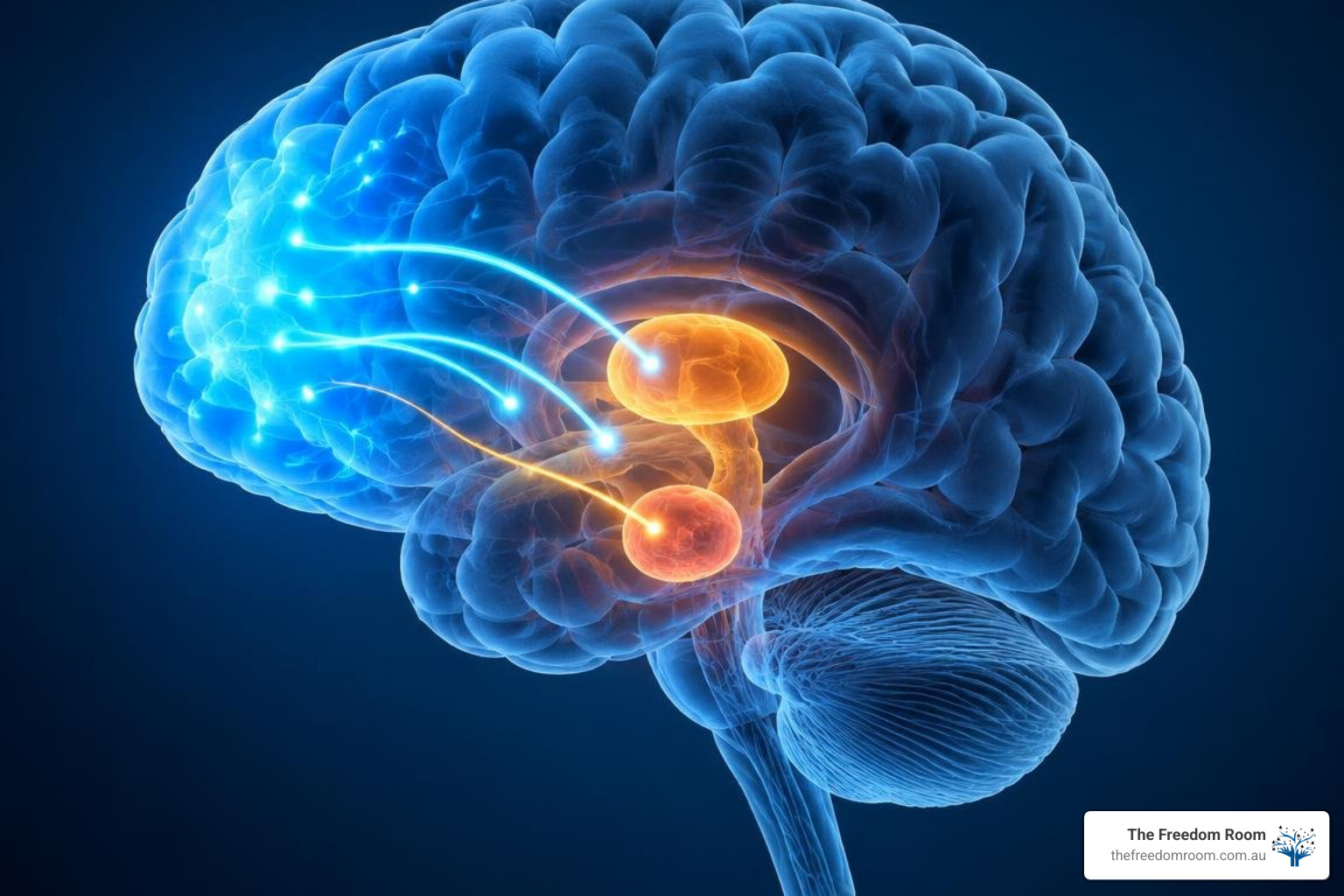
Problematic alcohol use alters neural networks responsible for reward processing, cognitive control, and stress habituation. Research indicates that mindfulness-based recovery frameworks can support neuroplastic healing by strengthening executive regulatory circuits and calming autonomic reactivity.
Evidence-Based Protocols in Mindfulness-Based Recovery: MORE and MBRP
Among the most extensively evaluated clinical models are Mindfulness-Based Relapse Prevention (MBRP) and Mindfulness-Oriented Recovery Enhancement (MORE).
MBRP teaches practical tools such as the SOBER breathing space:
- S (Stop): Pause whatever you are doing when an urge or stress arises.
- O (Observe): Notice your bodily sensations, emotions, and thoughts without judgment.
- B (Breathe): Direct your full attention to the inflow and outflow of your breath.
- E (Expand): Broaden your awareness to your entire body and your immediate environment.
- R (Respond): Choose a conscious, values-aligned response rather than an automatic reaction.
MORE builds upon these concepts by combining mindfulness with positive psychology techniques, specifically cognitive reappraisal and the conscious savouring of healthy, natural rewards. A landmark Mindfulness-Oriented Recovery Enhancement clinical trial published in JAMA Internal Medicine evaluated MORE against supportive group psychotherapy among adults with chronic pain and opioid misuse in primary care (Garland et al., 2022). At the 9-month follow-up, 45.0% of participants receiving MORE were no longer misusing opioids compared with 24.4% in supportive psychotherapy, alongside significant improvements in pain severity and functional interference. While these findings demonstrate substantial clinical utility, individual responses to therapy vary, and multi-component care remains essential.
Reward Pathways and Autonomic Stress Reactivity
Chronic substance use often leads to an allostatic state where natural rewards lose their salience while drug-related cues dominate attention. Scientific literature exploring the neurocognitive mechanisms of mindfulness in addiction suggests that mindfulness training enhances top-down prefrontal cortex activation, strengthening frontostriatal connectivity and moderating hyperactive dopamine signalling in the ventral striatum (Priddy et al., 2018).
Furthermore, mindfulness downregulates amygdala hyper-reactivity during acute stress. In a broader systematic review of mindfulness-based interventions, researchers documented consistent improvements in heart rate variability (HRV), a key physiological index of autonomic flexibility and parasympathetic regulation (Sancho et al., 2018). Enhanced tonic and phasic HRV reflects an improved biological capacity to recover smoothly from emotional triggers rather than reacting impulsively.
Practical Integration and Long-Term Recovery Pathways
Applying mindful awareness in daily life requires developing accessible, practical habits that can be utilised whenever distress or cravings emerge.

Developing Coping Mechanisms and Craving Management Skills
Recovery is strengthened when you build a comprehensive toolkit for emotional regulation and trigger management. Practical approaches include:
- Practising dealing with cravings through brief, structured pause exercises during daily transitions.
- Consulting a developing coping mechanisms guide to identify healthy emotional outlets that fit your personal routine.
- Utilising grounding exercises that stop spiralling thoughts in their tracks, such as the 5-4-3-2-1 sensory method, to bring your attention back to your immediate environment.
- Integrating evidence-informed stress and anxiety management techniques to support overall nervous system balance.
By cultivating these skills, you create space between experiencing an urge and choosing your behavioural response.
Clinical Implementation and Supported Care Options
While mindfulness techniques provide valuable day-to-day coping strategies, they should always be implemented within a safe, professionally supported framework.
If you or someone you care about may be experiencing physical alcohol dependence, it is critical not to stop drinking suddenly without professional medical guidance. Alcohol withdrawal severity varies considerably between individuals, ranging from mild tremors, anxiety, and sweating to potentially severe complications such as seizures or delirium tremens. A qualified healthcare professional, such as a general practitioner or addiction medicine specialist, can assess physical dependence and provide safe medical supervision. General educational information cannot predict individual withdrawal timelines or substitute for individual clinical assessment. If serious symptoms occur, urgent medical care should always be sought.
As part of a structured care plan, evidence-based relapse prevention strategies provide ongoing behavioural guidance and accountability. At The Freedom Room, we understand that sustainable change thrives on compassionate, personalised guidance. Our team brings authentic lived experience in recovery alongside professional clinical training, offering tailored in-person addiction counselling as well as our accessible online 12-week recovery program.
Start Your Journey to Lifelong Recovery Today
Mindful awareness offers a gentle, grounded pathway to help you understand your triggers, navigate cravings without self-judgement, and reconnect with what matters most to you. When combined with appropriate medical care, structured therapy, and authentic community connection, mindfulness practices can empower you to build lasting emotional balance and purposeful daily habits.
We are here to walk beside you with genuine empathy and practical guidance every step of the way. Discover how our personalised Our Services can support your goals, explore our comprehensive online recovery program, or Contact Us directly to take your next positive step. You can also visit our welcoming team in person at 9a/521 Beams Rd, Carseldine QLD 4034.
Frequently Asked Questions
Can mindfulness help reduce alcohol cravings?
Yes, clinical studies indicate that mindfulness practices, such as urge surfing and the SOBER breathing space, can help reduce the perceived intensity and distress of cravings by training individuals to observe sensations without acting on them automatically.
Is mindfulness-based recovery a substitute for medical addiction treatment?
No. Mindfulness is a complementary psychological framework. It does not replace medical detoxification, clinical pharmacotherapy, or comprehensive psychological care, especially where physical dependence is present.
Should I stop drinking suddenly if I suspect physical dependence?
No. If you may be physically dependent on alcohol, sudden cessation can trigger unpredictable and potentially severe withdrawal symptoms. Always consult a general practitioner or medical professional to arrange a safe, supervised plan tailored to your health needs.
How often should I practise mindfulness to support my recovery?
Even brief daily practices of five to ten minutes can help build attentional stability. Consistency is more beneficial than occasional long sessions, helping you integrate the mindful pause into everyday challenging moments.
References
Korecki JR, Schwebel FJ, Votaw VR, Witkiewitz K. “Mindfulness-based programs for substance use disorders: a systematic review of manualized treatments..” Substance abuse treatment, prevention, and policy, 2020. PMCID PMC7392831. Garland EL, Hanley AW, Nakamura Y, Barrett JW, Baker AK, Reese SE, Riquino MR, Froeliger B, Donaldson GW. “Mindfulness-Oriented Recovery Enhancement vs Supportive Group Therapy for Co-occurring Opioid Misuse and Chronic Pain in Primary Care: A Randomized Clinical Trial..” JAMA internal medicine, 2022. PMCID PMC8886485. Priddy SE, Howard MO, Hanley AW, Riquino MR, Friberg-Felsted K, Garland EL. “Mindfulness meditation in the treatment of substance use disorders and preventing future relapse: neurocognitive mechanisms and clinical implications..” Substance abuse and rehabilitation, 2018. PMCID PMC6247953. Sancho M, De Gracia M, Rodríguez RC, Mallorquí-Bagué N, Sánchez-González J, Trujols J, Sánchez I, Jiménez-Murcia S, Menchón JM. “Mindfulness-Based Interventions for the Treatment of Substance and Behavioral Addictions: A Systematic Review..” Frontiers in psychiatry, 2018. PMCID PMC5884944.